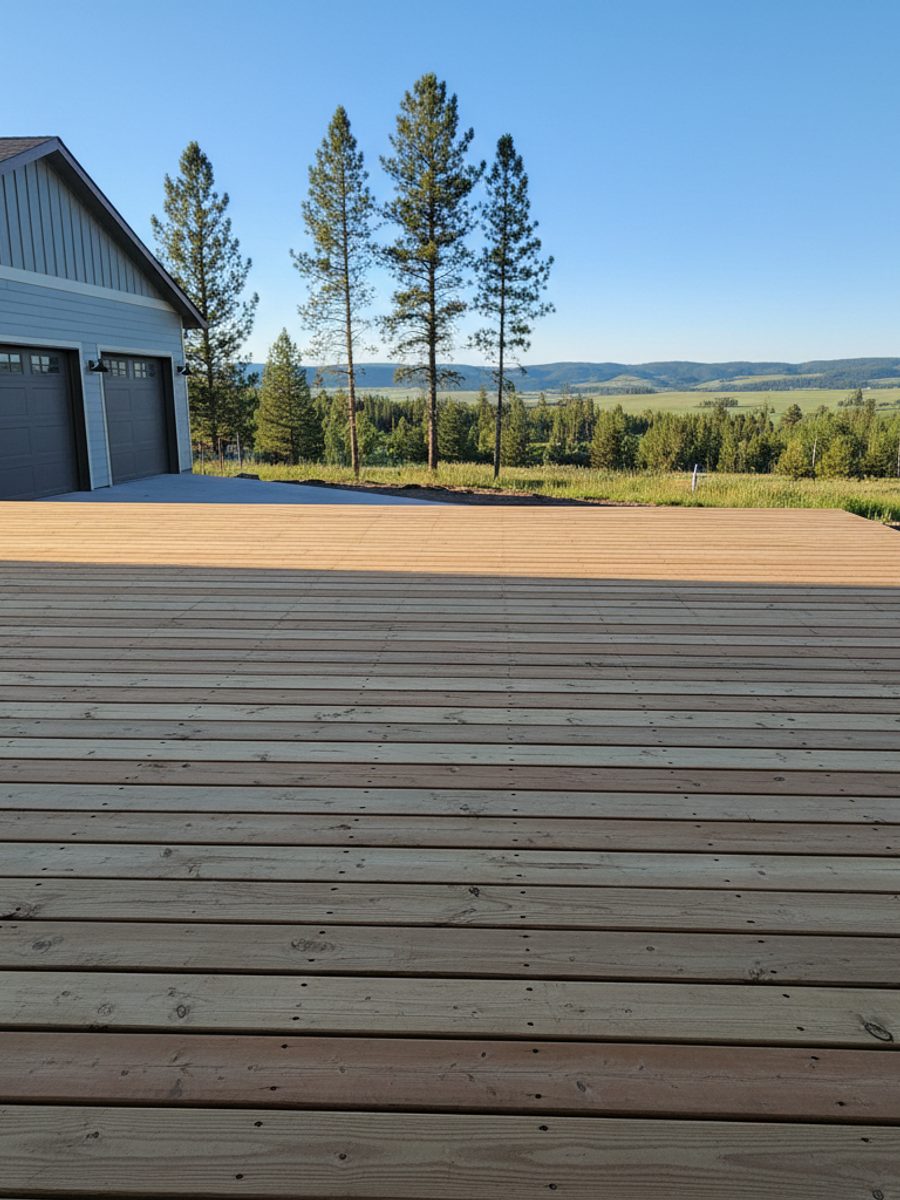
Deer Lodge is a small enough town that everybody knows somebody who builds decks on the side. Some of those guys are good. A lot of them have never poured a footing below the frost line and never will, because nobody's ever called them on it. This post is about the questions that actually separate a builder who knows what he's doing from one who's just handy with a circular saw.
The valley here sits around 4,700 feet, and that elevation matters more than people think. Frost goes deep. Footings around here need to sit well below three and a half feet, and in some spots closer to four, or the ground will heave them come spring thaw and you'll get a deck that rocks like a boat by year three. Ask any builder how deep they're going on footings before you ask about anything else. If the answer is "however deep the auger goes" or "about two feet, that's plenty," that's your answer too.
Ask about the ground before you ask about the wood
Soil in and around Deer Lodge runs from sandy loam up on the benches to heavier clay down closer to the Clark Fork bottomland. Clay holds water and swells. A footing poured in wet clay without enough gravel base under it will settle unevenly, and you'll see it in a sagging corner of the deck within a couple of winters. A builder who's worked here for any length of time should be able to tell you, without hesitating, whether your lot is the kind that needs extra base rock under the footings or extra drainage around them. If they've never thought about it, they've never had a deck fail on them, or they didn't stick around long enough to see it happen.
High water table shows up in a few spots close to the river too. If your yard holds standing water after a hard rain in June, say so before the builder ever breaks ground. It changes where the posts should go and sometimes changes whether a ground-level deck makes sense at all versus one built up on proper footings.
Lumber, fasteners, and what our winters do to both
Pressure-treated lumber is the standard here for framing, and it should be rated for ground contact if any part of it is within 6 inches of soil or sits in a wet spot after snowmelt. Composite decking has gotten popular for the boards themselves because it doesn't crack and silver the way pine does after a few freeze-thaw cycles, but composite still needs a wood or steel frame underneath, and that frame is where the real engineering happens. A deck can look great on top and still be sitting on joists that are undersized for our snow load.
Ask what fasteners they're using at the ledger board, the spot where the deck bolts to the house. This is the single most common failure point I see on repair calls. Nails instead of structural screws or through-bolts, no flashing tucked behind the siding, and water gets behind the ledger for years before anyone notices the rim joist has gone soft. By the time it shows up as a spongy spot under your feet, there's usually rot running two or three feet in either direction. A builder who mentions flashing and proper ledger fasteners without you having to ask is a builder who's fixed this problem on somebody else's deck before.
Permits are not optional, and skipping them costs you later
Most deck work in and around Deer Lodge needs a permit through Powell County, and that permit process usually means an inspector checking footing depth before you pour, and a final check on railing height and guard spacing once it's built. Any builder who tells you permits are a waste of time or that they'll just handle it under the table is telling you they don't want an inspector looking at their footings. That should worry you more than the permit fee ever would. If you sell the house later, an unpermitted deck can hold up the closing or force the buyer to demand it get torn out and rebuilt to code. It's cheaper to do it right the first time than to have that conversation with a real estate agent five years from now.
What a real quote looks like
A quote that just says "deck, 12x16, $8,500" isn't a quote, it's a guess dressed up as a number. A real one breaks out footing count and depth, joist spacing, beam size, what grade of lumber or which composite line, and whether the railing is included or a separate line item. It should also say something about the timeline, because our building season here is short. Realistically you're pouring footings and framing from May through September, and a builder who's willing to promise you a deck in January either doesn't understand our winters or doesn't plan to be around to answer for it come spring.
Get more than one quote if the job is anything bigger than replacing a few boards. Compare them line by line, not just the bottom number. Two quotes $2,000 apart usually means one guy is using 2x8 joists 16 inches on center and the other is using 2x10s at 12 inches, and only one of those holds up under three feet of wet March snow.
Red flags worth walking away from
- No mention of frost depth or footing depth, ever, unprompted.
- Wants full payment up front before any material is on site.
- Can't tell you what fastener they use at the ledger board.
- Tells you a permit isn't necessary for a deck attached to the house.
- Has no answer for what happens if they hit rock or a high water table digging your footings.
None of these things are complicated once you know to ask. Most homeowners just don't know they need to. Deer Lodge is a small town, and the deck builders who've been at it for years have already had the callback where a deck failed and had to explain why. The ones who haven't had that call yet are either very good or haven't been doing it long enough to find out. Ask the questions above and you'll know which one you're talking to before you ever sign anything.
If you're weighing options for a new deck, a repair, or just want someone to look at footings that were never done right the first time, that's the kind of work we do at Mighty Deck Solutions.